
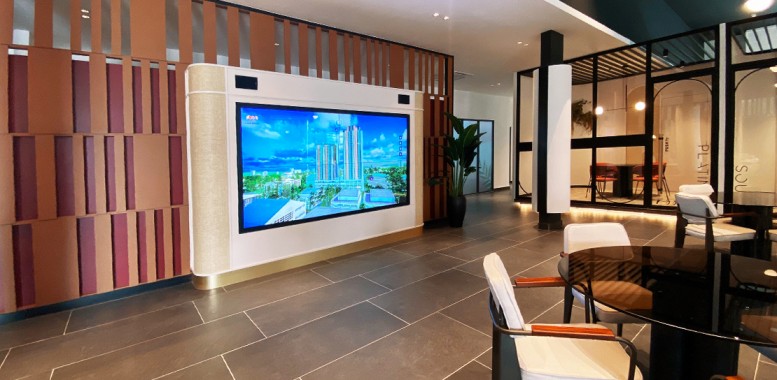
Walk through Pavilion KL or hop on the Kelana Jaya LRT, and it’s hard to miss the shift. Bright, animated screens have replaced many of the static posters that once lined retail corridors and transit platforms. This isn’t just an aesthetic upgrade — it’s a fundamental change in how brands connect with consumers. Across the country, digital signage software Malaysia businesses are adopting at an accelerating pace, and the results are hard to argue with. For retailers, corporate offices, and public institutions alike, dynamic screens are quickly becoming one of the most powerful tools in the modern marketing toolkit.
But what’s driving this transition, and what does it mean for Malaysian businesses that haven’t yet made the switch? This post breaks down the key benefits, features, real-world applications, and future direction of digital signage — so you can decide whether it’s time to rethink your own approach.
Why Static Billboards Are Losing Ground
Traditional billboards and printed posters served their purpose for decades. They’re familiar, cost-predictable, and require no technical expertise to install. The problem? They can’t adapt.
A static billboard promoting a weekend sale can’t update itself when the promotion ends on Sunday. A printed menu board can’t reflect a price change until someone physically replaces it. For Malaysian consumers — who are increasingly mobile, digitally savvy, and accustomed to real-time information — this rigidity is a growing liability for brands.
Dynamic digital content solves this directly. Retailers can push flash sale alerts within minutes. Restaurants can rotate menus based on time of day. Corporate lobbies can stream live announcements or KPIs on demand. The content keeps pace with the business, not the other way around.
There’s also the engagement factor. Research consistently shows that motion and animation capture significantly more attention than static visuals. In high-footfall environments like shopping malls and transit stations, that difference in attention can translate directly into sales.
What Modern Digital Signage Software Actually Does
It’s worth separating the hardware (the screens) from the software that powers them — because the software is where most of the value lies.
Remote Content Management
Modern digital signage platforms allow operators to manage hundreds of screens from a single dashboard. Whether you’re running a chain of stores across Kuala Lumpur, Penang, and Johor Bahru, or managing displays across multiple floors of a corporate tower, content can be scheduled, updated, and monitored remotely. No physical visits. No printing costs. No waiting.
Real-Time Updates and Scheduling
Good signage software lets you programme content down to the hour. You can set a breakfast promotion to run between 7am and 10am, switch to a lunch deal automatically, and then push a happy hour message at 5pm — all without touching a screen. For businesses running time-sensitive campaigns, this level of control is genuinely transformative.
Interactive and Touchscreen Displays
Increasingly, digital signage isn’t just something customers look at — it’s something they interact with. Touch-enabled displays are being used for wayfinding in large shopping complexes, self-service directories in hospitals, and product exploration kiosks in retail stores. This interactivity extends dwell time and creates more memorable brand experiences.
Real-World Wins: KL’s Retail and Transit Hubs
The most compelling evidence for digital signage’s impact in Malaysia comes from how it’s already being used.
In Kuala Lumpur’s major shopping districts — Bukit Bintang, Mid Valley, and KLCC in particular — flagship stores and F&B chains have adopted full-scale digital signage networks. Screens at entrances promote current offers, while in-store displays guide customers through product ranges and highlight loyalty programme benefits. The ability to refresh content without reprinting materials has also cut operational costs meaningfully for multi-location brands.
Public transport has been another high-impact environment. Digital displays in RapidKL stations and key LRT interchanges now carry a mix of public service announcements, advertising content, and real-time transit updates. For advertisers, these placements offer high-frequency exposure to commuters during predictable dwell times — a level of precision that print simply can’t match.
Overcoming the Real Challenges
Digital signage isn’t without its complications, and Malaysian businesses considering the switch should go in clear-eyed about the obstacles.
Connectivity remains one of the more persistent issues, particularly in older buildings or locations outside major urban centres. Many signage platforms now offer offline playback capabilities — screens can operate from locally cached content when internet access drops — but this requires upfront configuration and planning.
Localised content creation is another consideration. Malaysia’s multicultural audience means that effective signage often needs to work across Bahasa Malaysia, English, Mandarin, and Tamil. Building content pipelines that serve all these audiences without diluting the message requires both creative investment and a platform that supports multi-language scheduling.
Hardware maintenance is a longer-term operational cost that’s easy to underestimate. Commercial-grade screens are built for continuous use, but they still require servicing, and businesses need a clear support structure — whether in-house or through a managed services provider — before scaling up.
What’s Coming Next: AI, Personalisation, and Data
The current wave of digital signage adoption in Malaysia is largely about replacing static content with dynamic content. The next wave will be about making that content genuinely intelligent.
AI-powered signage software is already beginning to emerge, with systems capable of detecting audience demographics through camera data and adjusting content in real time. A display outside a sports retailer might show running gear when it detects a younger, active demographic passing by — and switch to lifestyle apparel when the profile shifts. This kind of contextual personalisation has been the domain of digital advertising for years; physical signage is catching up fast.
Data analytics will play a growing role too. Platforms are increasingly able to report on which content performs best at which times and locations, giving marketers the same feedback loops they’re used to in email or social media campaigns. For Malaysian brands trying to make smarter decisions about where to invest their marketing budgets, this data will be invaluable.
The integration of signage networks with broader marketing ecosystems — CRM platforms, loyalty apps, e-commerce systems — is also on the horizon. Imagine a customer’s loyalty status triggering a personalised welcome message on a store display the moment they walk in. That kind of connected experience is no longer science fiction; it’s a near-term reality for businesses building the right infrastructure today.
Starting Your Digital Signage Journey
The good news for Malaysian businesses exploring digital signage for the first time is that the barrier to entry has dropped considerably. Cloud-based software platforms have made deployment faster and more affordable, hardware costs have come down, and a growing local ecosystem of providers means support is more accessible than it was even five years ago.
A practical starting point is to identify one or two high-impact locations — a flagship store entrance, a reception lobby, a key transit-facing display — and treat them as a pilot. Measure dwell time, engagement, and any trackable conversion metrics before scaling. Start with a platform that supports remote management and scheduling from day one, even if you only have a handful of screens initially; you’ll want that infrastructure in place when you grow.
The businesses that move early will have a meaningful advantage: more data, more refined content strategies, and more experienced teams. The shift to dynamic, software-powered signage isn’t coming — for many parts of Malaysia’s retail and corporate landscape, it’s already here.
Leave a Reply